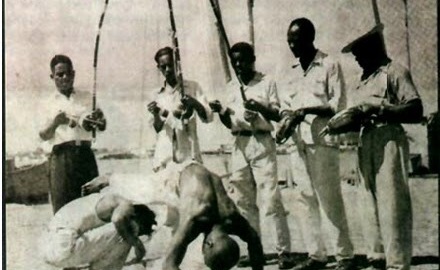
Admittedly I write from a very limited context at the moment. I’m a capoeirista in London who deals with an Afro-Brazilian art form thousands of miles from its homeland. I don’t encounter the rich history of old mestres on a daily basis. The nuanced cultural assumptions that underpin the day to day understanding of the music of capoeira is something I have to unpick at a cultural distance.
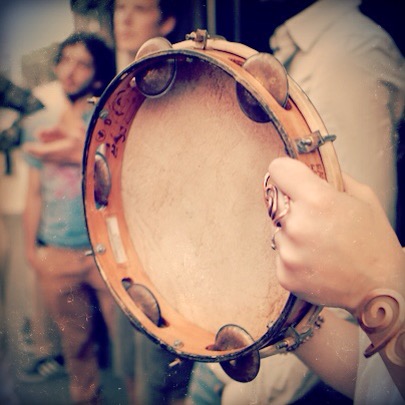
With this cultural distance in mind I would like to focus a little on the attitude to what music we intend to create with the bateria. The tendency in London is to allow everyone to have a go with the music. This in itself is not a bad thing – all of us as capoeiras have to be cajoled, encouraged and forced to engage with the instruments at some stage in our development. However, when it comes to the roda, what carries into the cultural manifestation of capoeira is a cacophony of sound that can scarcely be considered music.
For a while I wondered why this was. It wasn’t because there wasn’t a passion for music. There obviously is and people will speak with great fervour and concern about the music. It isn’t because no one in London can play the music. In fact we have a few gifted berimbau players from different schools who are continuing to practice and improve their skills. I fear the reason the music sometimes falls apart in rodas is a combination of ego and poor practice.
The ego problem develops because of a complex desire to support the music, be involved and show people that you have some inkling or ability with the instruments. If it’s a student’s group or roda they may be unwilling or threatened by visitors who have a better musical awareness than them. As students, teachers and capoeiras we have to let this go and place more emphasis on good music over group pride. If we are so threatened by the musical ability of others we must practice the music more than we practice the movement, which very few of us do.
This inevitably brings us to the second issue surrounding the music – what kind of practice are we as capoeiras engaging in? For some of us we never take practice beyond the confines of organised music classes; others will get together with friends and create a riot of sound where each person is intent on listening to their instrument; then there are those that will buy a berimbau, string it up and watch as layers of dust gather on the top – a testament to lack of practice – perhaps only played when noncapoeiristas come round and ask what the fishing rod is for. All of these are problematic and indicate an incomplete attitude to the music. We need orientation, but we also need to be self-motivated; we need to play with others, but jam sessions often lead to the establishment of incorrect technique or the inability to play at different tempos; we also need our instruments to practice but without practice the berimbau might as well be broken in two and used as maculele sticks.

So what do I suggest? Practice in many forms, but practice focused on technique, quality of sound, tempo and with an ear on the music of old (Mestres Traira, Bimba, Caiçara, Pastinha etc.) Playing along to the various rhythms and speeds of Traira will expose deficiencies in technique that no amount of sitting around with your friends and contemporaries will. When great berimbau players like Mestre Boca Rica are at events we should study their techniques, we should watch attentively, ask pertinent questions and be willing to correct our mistakes. As teachers of music we must be critical, always seeking to improve the quality of the bateria and the players of instruments in our group. We should always be seeking to improve the music. Capoeiras should be at least as focused on the music as the movement. Especially if we find it hard. Practice is just that – it might not feel good, it might not always sound nice, but it is a means of improving technique and developing better music. And better music is really something that we can all agree on regardless of style, lineage or tshirt colour.